

Welcome to Caorle, the Venice's coast jewel
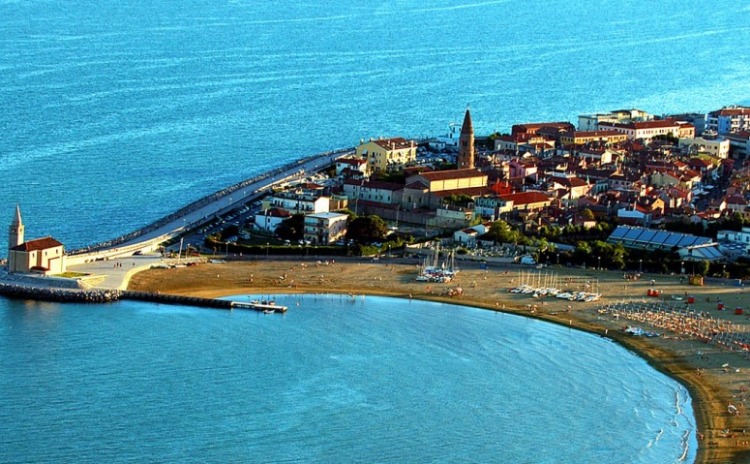
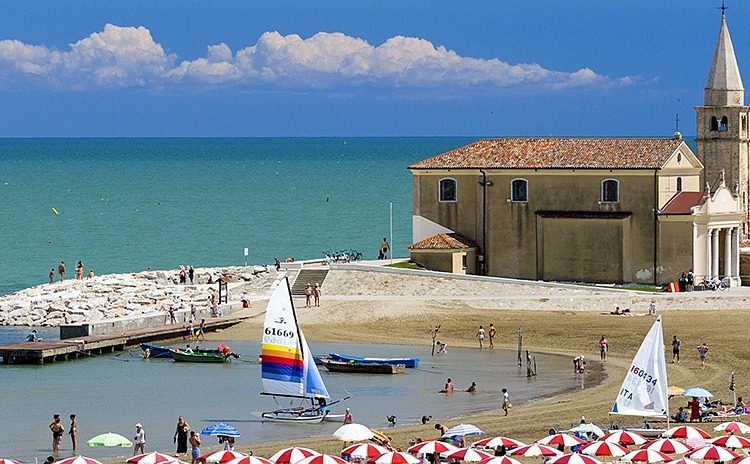
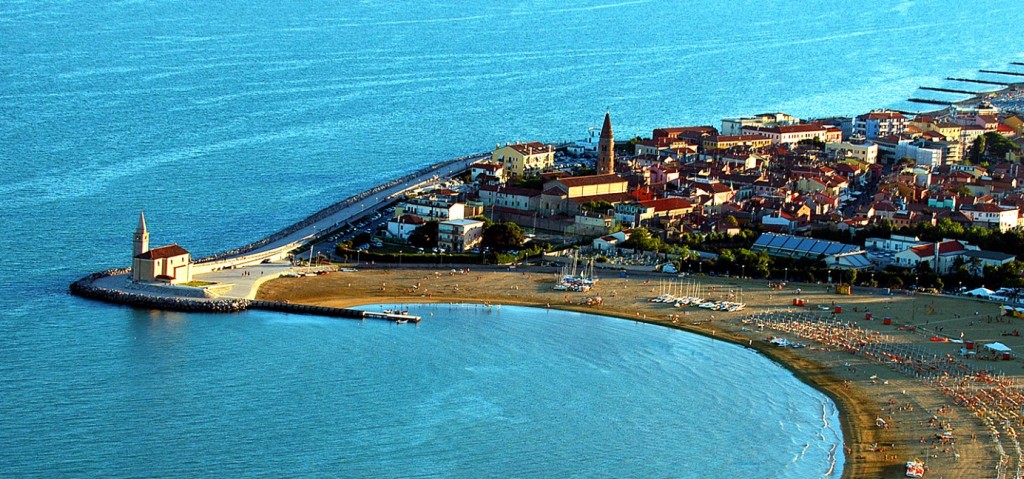
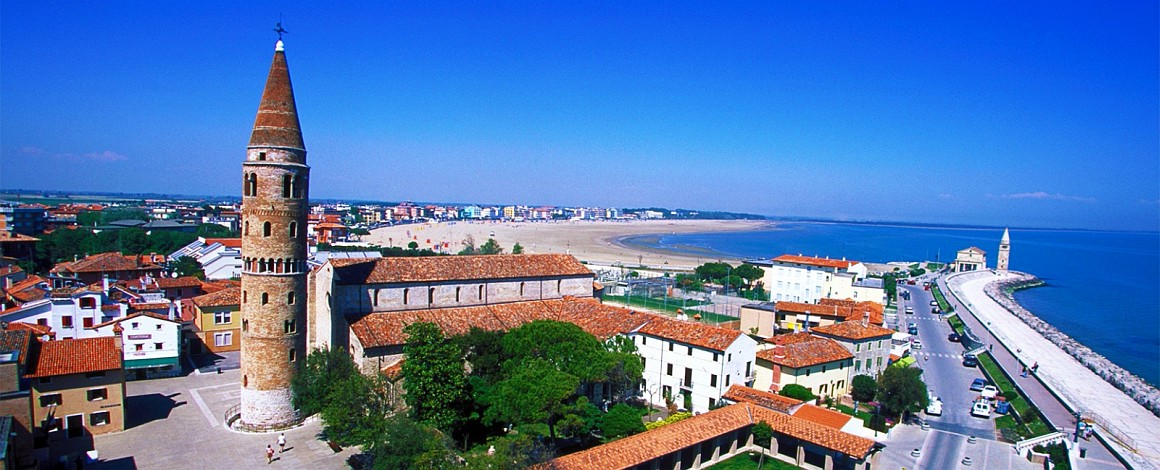
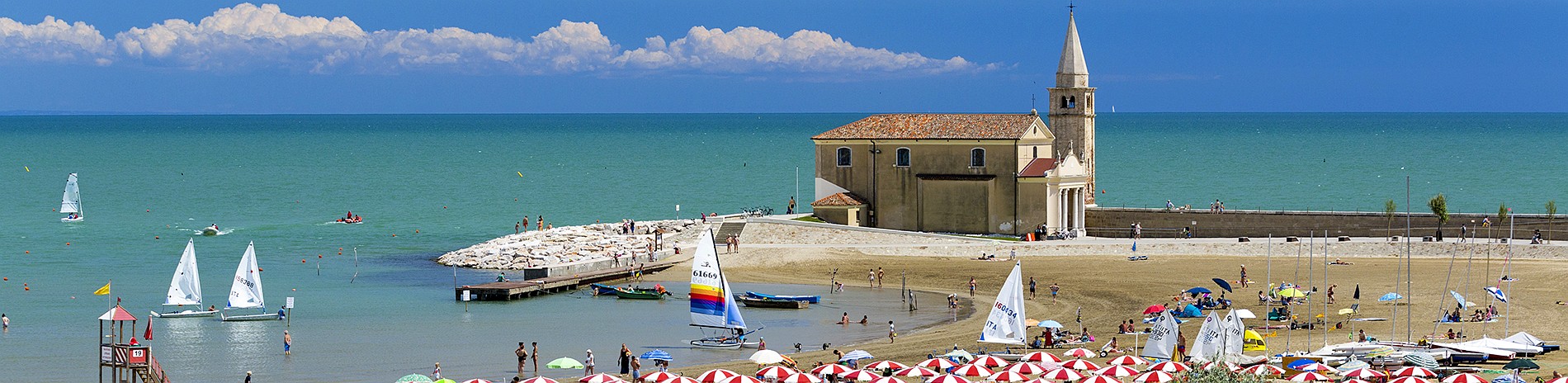
Caorle, in the province of Venice, is one of the most famous and popular seaside resorts on the Venetian coast. Colorful houses, narrow alleys (calle), small squares (campielli), and buried artificial canals (rio terà) characterize this town, which has successfully focused on preserving its landscape.
In fact, Caorle is not just a beautiful and well-equipped beach, but also one of the finest wetlands in Europe. It is certainly a complex environment due to the presence of marine, river, and lagoon waters, but it is also made evocative by the many bird species that nest here.
The name
According to some, the name Caorle derives from the Latin “caprulae” because of the many wild goats that used to graze in these lands. According to others, it comes from the cult of the goddess Capris. It is worth noting that the correct pronunciation is Càorle and not Caòrle.
Natural beauties: lagoon, casoni, and beach…
E. Hemingway was so struck by the beauty of Caorle's landscape that he described it in his novel Across the River and into the Trees. Even the European Community recognized the importance of this territory by designating it as a Site of Community Importance (SCI).
Vallevecchia – an area located between Caorle and Bibione – is one of the most beautiful wetlands in Europe. Thanks to their wild and unspoiled nature, its reed beds and bushes are chosen every year by many bird species for nesting. A short distance from this natural oasis stretches the beach, featuring the last sand dunes still visible in the Adriatic Sea, along with a thriving pine forest.
The lagoon and valleys of Caorle tell the history of this region through archaeological finds, and particularly through the "casoni". These humble homes – which are now a popular tourist attraction – were once the dwellings of local fishermen. You can spot them along the canals and "glebi" (minor canals) and recognize them by their elongated shape and rounded shorter sides.
Their most distinctive feature is the roof made of dried reeds. The reeds are arranged with their tips pointing downwards to allow rainwater to drain easily. Originally, the casoni didn't even have windows, so the smoke escaped through the gaps between the reeds on the roof. The smoke that couldn't escape formed a substance that naturally waterproofed the roof.
…and architectural wonders: the Cathedral
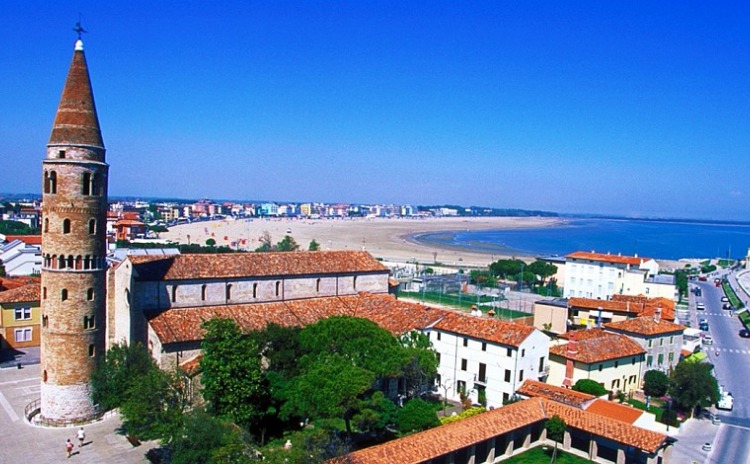
The Cathedral (Duomo) of Caorle was built in 1038 over an earlier early Christian basilica. Dedicated to Saint Stephen Protomartyr, it features a very simple and austere Romanesque facade. The central nave is characterized by two large rose windows, while the two side aisles each have a smaller one. The three entrance doors open directly beneath these rose windows.
The interior is designed in a Romanesque and Byzantine-Ravenna style. The ceiling of the central nave has wooden trusses, while the side aisles feature semi-trusses. What makes the Cathedral easily recognizable is its bell tower dating back to the 11th century. Its unique cylindrical shape recalls that of Sant’Apollinare in Ravenna, while the conical spire makes it one of a kind. Standing 48 meters high, it features Romanesque mullioned windows, single-light windows, small columns, and a slight lean.
Caorle website: http://www.comune.caorle.ve.it/.
Altitude of the Municipality: 1 m (zone: 5)