

-
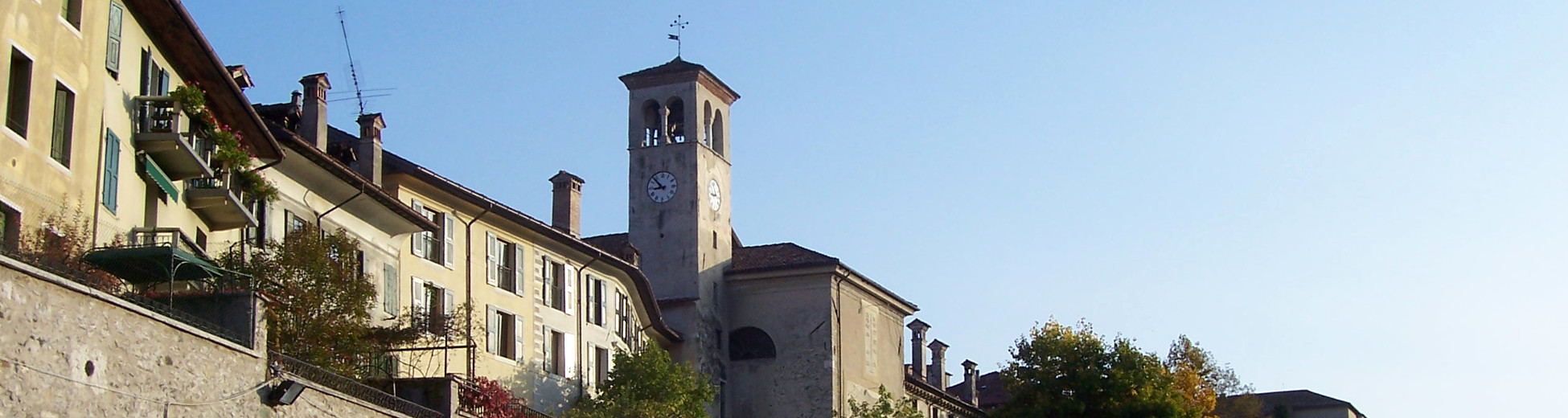 The city wallPicture of the city wall of Feltre.
 -
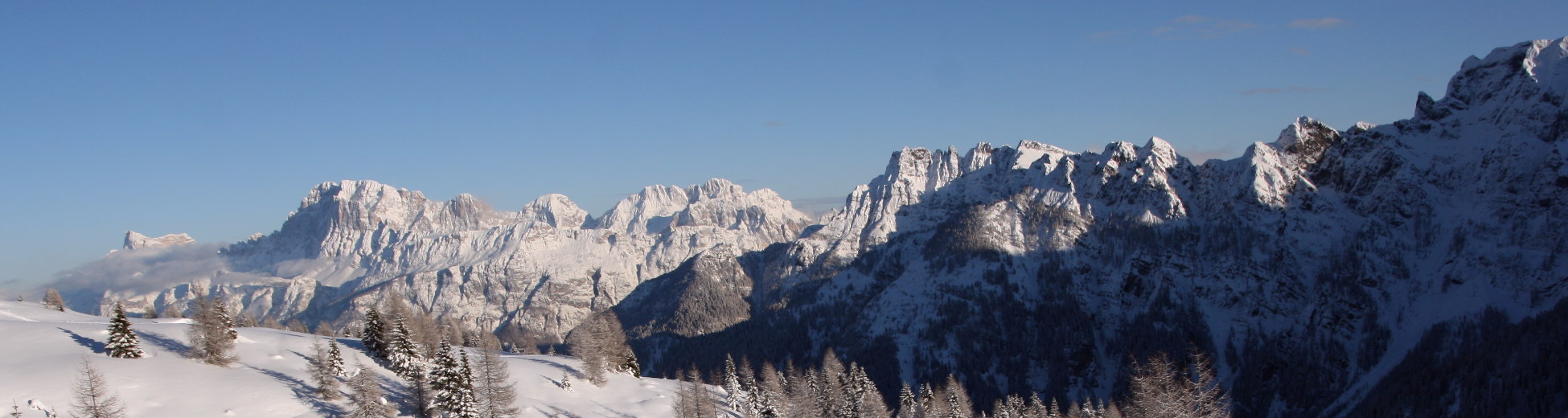 Skiing in FalcadeSkiing in fresh snow surrounded by Dolomites.
 -
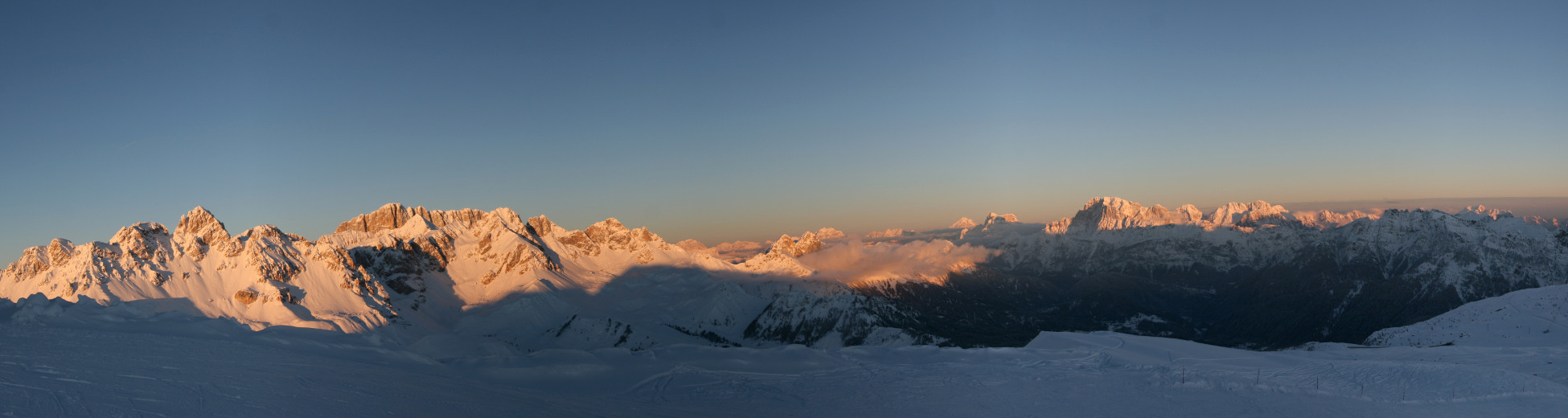 Dolomites from Falcade Ski ResortFalcade ski resort is surrounded by stunning mountains, the Dolomites.
 -
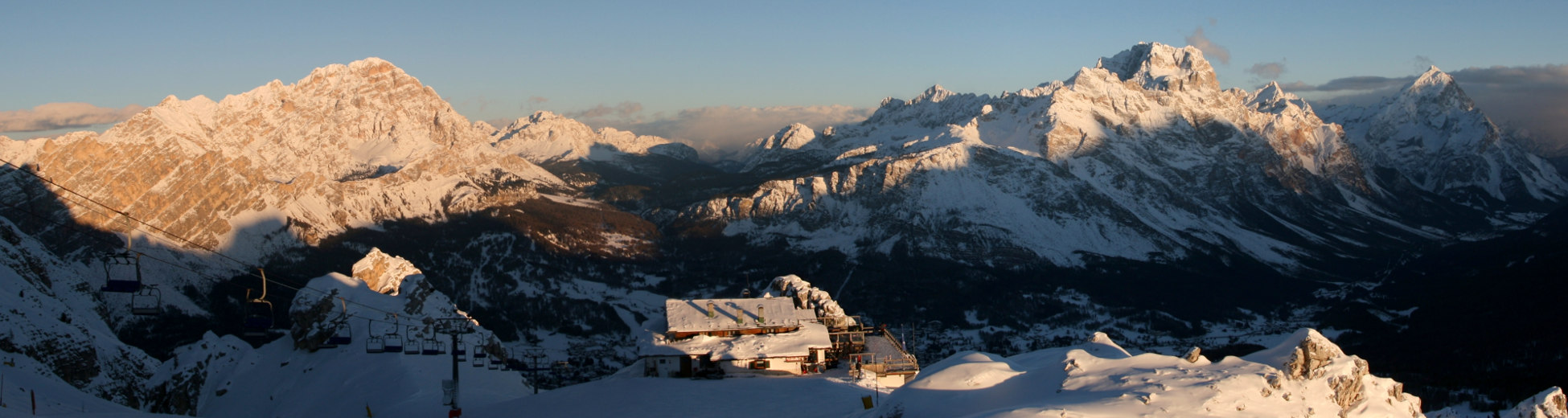 Sunset from the ski slopesSunset from the ski slopes of Cortina d'Ampezzo
Belluno Travel Guide: Discover the True Heart of the Italian Dolomites
The Province of Belluno is the largest and least populated among all Venetian provinces. Since most of the iconic Dolomite groups—Tofane, Monte Pelmo, Civetta, Antelao, Cristallo, Sorapis, Sella, Marmolada, and the Tre Cime di Lavaredo—are located within its borders, it is proudly considered the true Province of the Dolomites.
For this very reason, a significant part of its territory is recognized as a UNESCO World Heritage Site.
In its southern part lies the Valbelluna, the widest and most populated valley in the province. The most crucial river in terms of length and water flow is the historic Piave.
Other key rivers include the Cordevole, the Boite, and the Cismon. The region is also dotted with numerous lakes, both natural (such as Misurina and Alleghe) and artificial (like Auronzo and Mis). However, following the heart-wrenching Vajont tragedy, the construction of new artificial reservoirs was permanently halted.
This land is also home to numerous castles, such as the Botestagno Castle in Cortina d'Ampezzo, of which only a few ruins remain today. Others include Monterico Castle in Pieve di Cadore, Alboino Castle in Feltre, and Andraz Castle in Livinallongo Col di Lana. Meanwhile, the fairy-tale Castello di Zumelle in Mel stands as the best-preserved fortress in the entire province. And there are so many more to discover!
In the past, the solitary and crisp winter landscapes of this province brought families together around roaring fireplaces, giving birth to countless spellbinding legends. It is no coincidence that this is the magical land of the Anguane (water nymphs), the Mazarol, and other mischievous wood elves.
Similarly, the breathtaking natural phenomenon of the *enrosadira*—where the dolomite rocks glow a vibrant pinkish-red at sunset—inspired the famous legend of King Laurin and his rose garden. Meanwhile, the "Pale Mountains" inspired the story of the cosmic love between a prince and a princess of the Moon. Then there are tales about the birth of Monte Pelmo, the creation of Lake Misurina, and so many others...
In addition to the majestic Belluno Dolomites National Park, this province hosts the Regional Park of Cortina d'Ampezzo. You can also explore pristine state nature reserves like Monti del Sole, Valle Imperina, and Vette Feltrine, just to name a few, alongside regional reserves like Pian di Landro Baldassare and Piaie Longhe – Millifret.
The flora of the Belluno mountains features endemic species like Moretti's bellflower and the thorny milkvetch, alongside rare treasures like the Sternberg carnation, the Monte Cengio ice-plant, the Tyrolean primrose, and the silver geranium. The Rhaetian poppy—a perennial plant boasting bright yellow flowers—is a strictly protected species. The dense woods are a beautiful mix of broadleaf trees, Norway spruce, larch, beech, mountain pine, and dwarf willow.
The local wildlife is rich with chamois, roe deer, ibex, red deer, and mouflons. High up in the skies, it is possible to spot golden eagles, capercaillies, and rock ptarmigans, while nocturnal birds of prey include the Eurasian pygmy owl and Boreal owl.
The Belluno Dolomites also double as a world-class sports destination featuring renowned ski areas like Arabba-Marmolada, Civetta, Faloria-Cristallo, 5 Torri, and others. Most of these resorts are part of the world-famous Dolomiti Superski network, which is proudly the largest ski carousel in Italy, boasting 450 ski lifts and 1,200 km of pristine slopes. All areas within the Dolomiti Superski are seamlessly interconnected and accessible with just a single ski pass.
The Province of Belluno is also the birthplace of world-renowned legends, including the master painter Titian (Tiziano Vecellio), born in Pieve di Cadore, and the celebrated writer Dino Buzzati, who wrote beautifully about his home region:
“I say that my land is one of the most beautiful places not just in Italy, but on the entire globe... my homeland is called Belluno.”
Municipalities of Belluno province
| Municipality | Accommodations number |
|---|---|
| Agordo | [12] |
| Alano di Piave | [4] |
| Alleghe | [31] |
| Alpago | [24] |
| Arsiè | [10] |
| Auronzo di Cadore | [72] |
| Belluno | [66] |
| Borca di Cadore | [10] |
| Borgo Valbelluna | [43] |
| Calalzo di Cadore | [12] |
| Canale d'Agordo | [12] |
| Cencenighe Agordino | [4] |
| Cesiomaggiore | [17] |
| Chies d'Alpago | [3] |
| Cibiana di Cadore | [6] |
| Colle Santa Lucia | [10] |
| Comelico Superiore | [24] |
| Cortina d'Ampezzo | [108] |
| Danta di Cadore | [2] |
| Domegge di Cadore | [12] |
| Falcade | [35] |
| Feltre | [42] |
| Fonzaso | [5] |
| Gosaldo | [5] |
| La Valle Agordina | [3] |
| Lamon | [9] |
| Limana | [6] |
| Livinallongo del Col di Lana | [86] |
| Longarone | [9] |
| Lorenzago di Cadore | [3] |
| Lozzo di Cadore | [4] |
| Pedavena | [11] |
| Perarolo di Cadore | [5] |
| Pieve di Cadore | [25] |
| Ponte nelle Alpi | [16] |
| Quero Vas | [6] |
| Rivamonte Agordino | [3] |
| Rocca Pietore | [46] |
| San Gregorio nelle Alpi | [5] |
| San Nicolò di Comelico | [3] |
| San Pietro di Cadore | [11] |
| San Tomaso Agordino | [1] |
| San Vito di Cadore | [31] |
| Santa Giustina | [5] |
| Santo Stefano di Cadore | [16] |
| Sedico | [10] |
| Selva di Cadore | [18] |
| Seren del Grappa | [7] |
| Sospirolo | [8] |
| Sovramonte | [7] |
| Taibon Agordino | [7] |
| Tambre | [16] |
| Val di Zoldo | [50] |
| Valle di Cadore | [7] |
| Vigo di Cadore | [12] |
| Vodo Cadore | [5] |
| Voltago Agordino | [3] |